Exhibition Dates
April 17 – June 13, 2026
Opening Night
Thursday, April 16 | 6-8PM
Monday – Friday | 10AM to 6PM
Saturday | 11AM to 6PM
Di Donna Galleries
744 Madison Ave, New York
(Between 64th and 65th Street)

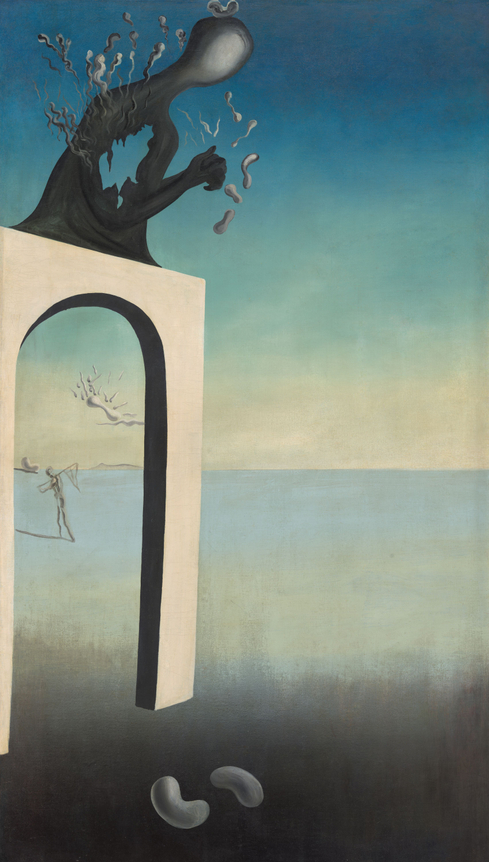
Salvador Dalí
Untitled (Dream of Venus), 1939
Oil on canvas
207 by 117.5 cm (81½ by 46¼ in.)
(61394)
ON LOAN
The Art Institute of Chicago, Gift of Mr. and Mrs. Joseph R. Shapiro, 1987.318
© Salvador Dalí, Fundació Gala-Salvador Dalí / Artists Rights Society (ARS), New York, 2018
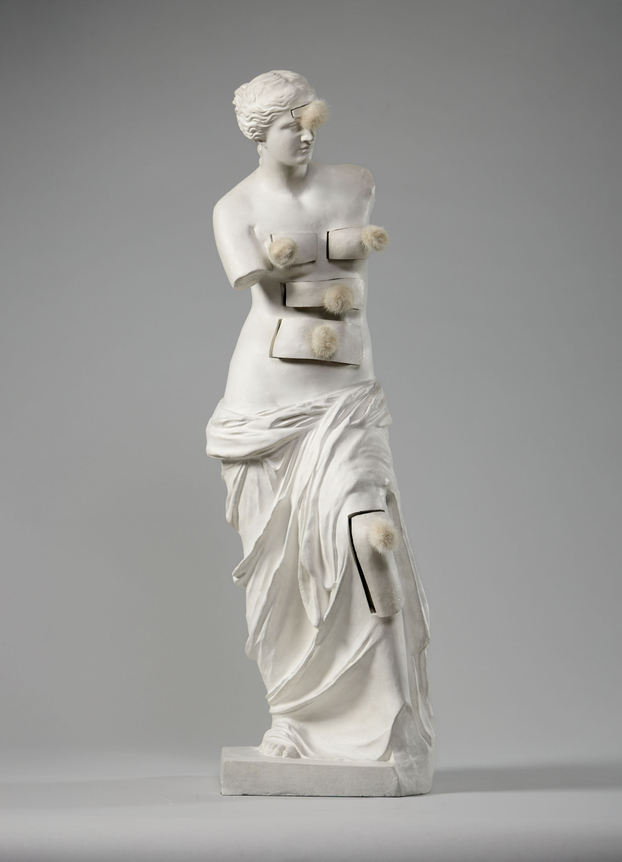
Salvador Dalí
Vénus de Milo aux Tiroirs (Venus de Milo with Drawers), 1936/64
Painted bronze and mink pompoms
Height: 97.5 cm (38⅜ in.)
Edition 0/5 + 1 AP
(41464)
ON LOAN
Private Collection
© Salvador Dalí, Gala-Salvador Dalí Foundation / Artists Rights Society (ARS), New York
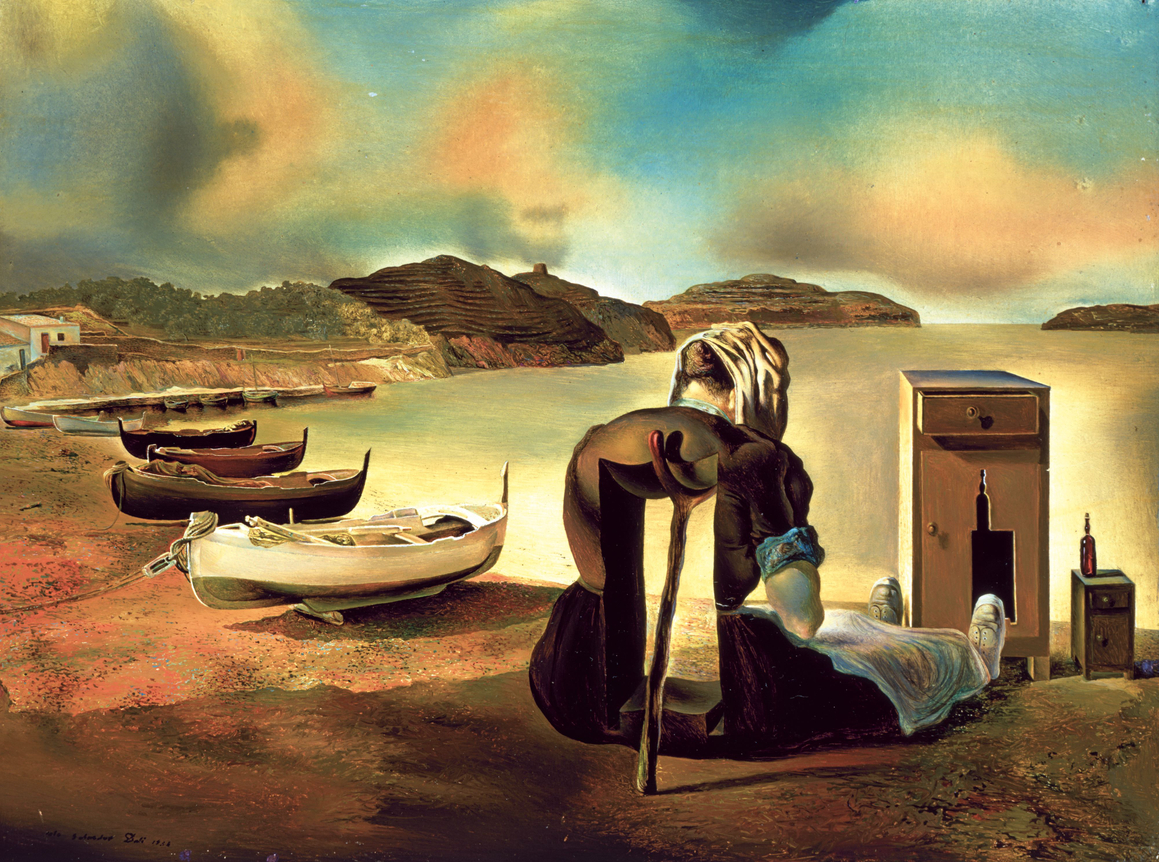
Salvador Dalí
El desnonament del moble aliment (The Weaning of Furniture-Nutrition), 1934
Oil on wood panel
17.2 by 24.1 cm (6¾ by 9½ in.)
(71640)
Foundation / Artists Rights Society (ARS), New York
Collection of The Dalí Museum, St Petersburg, FL
© Salvador Dalí Museum, Inc., St. Petersburg, FL, 2020
© 2026 Salvador Dalí, Gala-Salvador Dalí
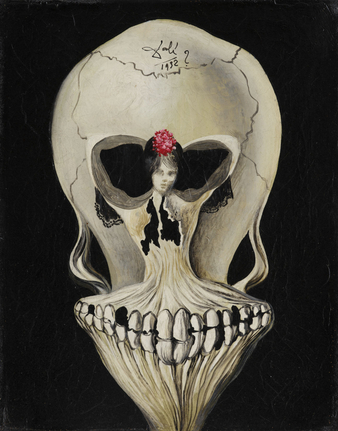
Salvador Dalí
Ballerine en tête de mort (Ballerina in Skull), circa 1939
Oil on canvas
24.5 by 19.5 cm (9⅝ by 7⅝ in.)
(61436)
ON LOAN
Private Collection
© 2025 Salvador Dalí, Gala-Salvador Dalí Foundation / Artists Rights Society (ARS), New York
Salvador Dalí
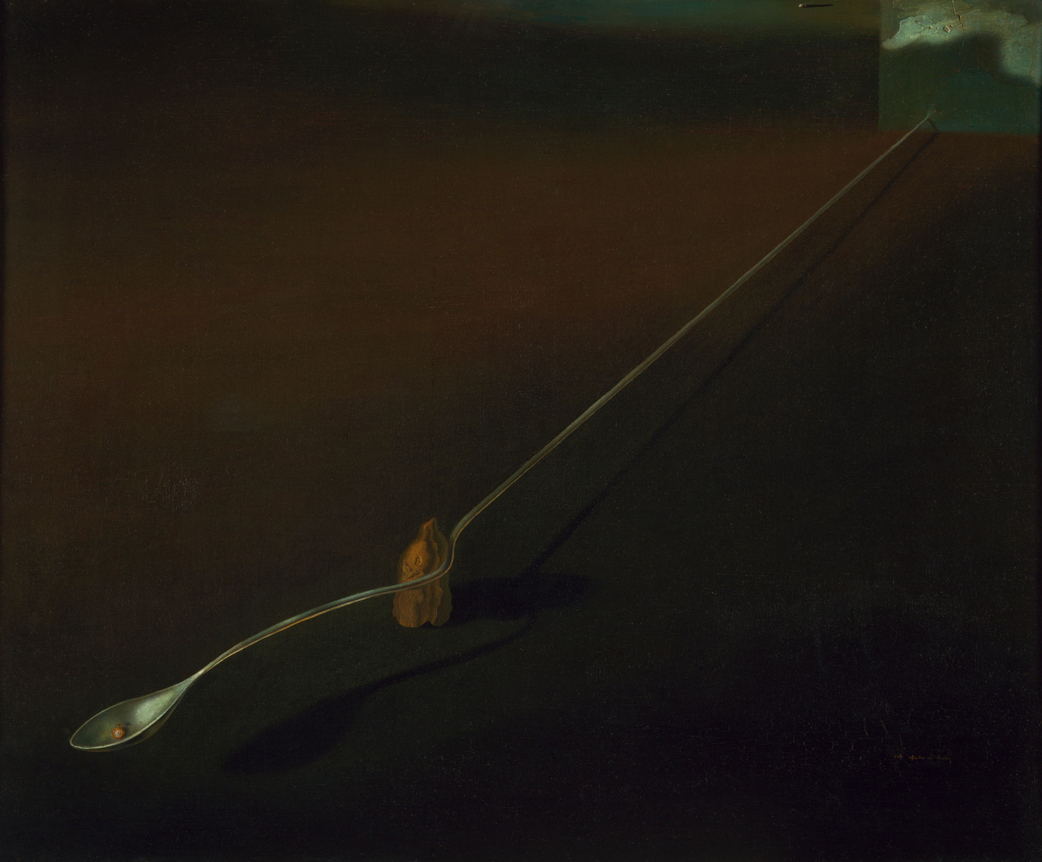
Agnostic Symbol, 1932
Oil on canvas
54 by 65.2 cm (21¼ by 25⅝ in.)
(61285)
ON LOAN
Philadelphia Museum of Art: The Louise and Walter Arensberg Collection, 1950-134-40
© Salvador Dali, Gala-Salvador Dali Foundation / Artists Rights Society (ARS), New York
Salvador Dalí
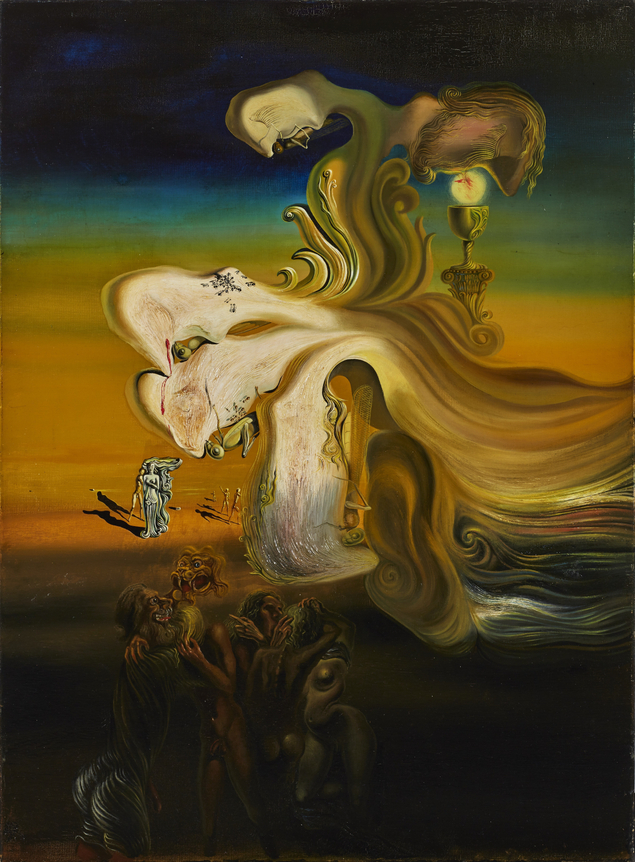
La Profanation de l'hostie (Profanation of the Host), circa 1930
Oil on canvas
100 by 73 cm (39⅜ by 28¾ in.)
(71639)
ON LOAN
Collection of The Dalí Museum, St Petersburg, FL
© Salvador Dalí Museum, Inc., St. Petersburg, FL, 2020
© 2026 Salvador Dalí, Gala-Salvador Dalí Foundation / Artists Rights Society (ARS), New York
Exhibition Dates
April 17 – June 13, 2026
Opening Night
Thursday, April 16 | 6-8PM
Monday – Friday | 10AM to 6PM
Saturday | 11AM to 6PM
Di Donna Galleries
744 Madison Ave, New York
(Between 64th and 65th Street)
Di Donna Galleries is pleased to present Dalí: The Great Years, 1929–1939, a major exhibition tracing the pivotal decade in which Dalí established both his mature artistic language and enduring public persona. It is the most significant presentation of Dalí’s work in New York since the Museum of Modern Art’s exhibition in 2008. The exhibition is on view from April 16 through June 13, 2026 at Di Donna’s Madison Avenue gallery.
Dalí: The Great Years, 1929–1939 brings together paintings, works on paper, and sculpture drawn from important private and public collections, including the Salvador Dalí Museum, St. Petersburg, Florida; the Art Institute of Chicago; the San Francisco Museum of Modern Art; and the Philadelphia Museum of Art, alongside archival material that illuminates Dalí’s creative evolution during one of the most consequential periods of the twentieth-century. Organized chronologically, the exhibition traces the artist as he emerged as a phenomenon unto himself, with a singular vision and persona intrinsic to his artistic expression.
The years 1929 to 1939 were transformative for Dalí. In this period, he formally aligned himself with the Surrealist movement in Paris while expanding the group's theoretical foundations. In the early 1930s, Dalí developed his signature paranoiac-critical method—a rigorous, self-induced hallucinatory technique in which irrational imagery could be systematically accessed and then rendered with meticulous precision. The result was a body of work of startling originality that collapsed the boundary between the unconscious and the known world. La Profanation de l'hostie (Profanation of the Host) (c.1930) is a highly illusionary yet deeply personal work, featuring multiple self-portraits, which confronts religion while addressing the artist’s own fears of death and decay.
In this period, Dalí also dramatically expanded Surrealism's reach beyond the painted canvas through his development of the “Surrealist Object.” Extending the principles of the movement into three-dimensions, as seen in the Vénus de Milo aux Tiroirs (Venus de Milo with Drawers) (1936/64), Dalí placed familiar objects together in an incongruous and outlandish manner to achieve a form with a sole purpose of furthering the human imagination. The decade also saw the artist make forays into design, film, theater, and commercial culture, including collaborations with fashion designers and cultural patrons like Elsa Schiaparelli and Gabrielle Chanel—broadening the place of Surrealism through the infiltration of the uncanny into every register of modern life.
The horrors of the Spanish Civil War, which erupted in 1936, cast a long shadow over the final years of the decade. Dalí's response was characteristically oblique—neither an engaged political witness nor simple evasion, but a displaced, anguished processing of violence and instability through a deepening psychic symbolism. Works from this period reveal Dalí’s own interpretation of trauma in their imagery of soft bodies, metamorphic architecture and premonitions of destruction. He fled Spain in 1938, spending four months at La Pausa, Gabrielle Chanel’s retreat on the French Riviera, where he painted the body of work that would be presented at the Julien Levy Gallery in New York the following year. By 1939, having definitively split from the Surrealist group and fleeing the conflict in Europe, Dalí relocated to the United States.
Central to both Dalí’s life and work in these years was his wife, Gala—born Helena Diakonova—whom Dalí met in 1929. She soon became his lifelong muse, partner and indispensable collaborator. Gala's was also a key architect of the Dalínian persona: the flamboyant public figure, the showman of the unconscious and the self-proclaimed genius who wielded eccentricity as precise strategy.
Dalí: The Great Years, 1929–1939 will be accompanied by a fully illustrated catalogue featuring an essay written by Dawn Ades, whose foundational scholarship has shaped the study of Dalí and Surrealism as a whole, in addition to a comprehensive chronology documenting the key events, exhibitions, and publications of Dalí's most defining decade.
Press Contact:
Sarah Goulet
sarah@sarahgoulet.com / +1 303 918 0393